

Sales Leader France & Benelux. Responsable des ventes de licences IBM et solutions AEXIS, du cadrage au licensing, renouvellements et bundles logiciels + services.
Dans de nombreuses organisations, la planification financière repose encore sur des fichiers Excel complexes, difficiles à maintenir et peu adaptés aux enjeux actuels de gouvernance, de collaboration et de simulation. IBM Planning Analytics apporte une réponse structurée à ces limites en offrant une plateforme EPM capable de centraliser les données, d'industrialiser les processus de planification et de fiabiliser la prise de décision. Cet article présente les fondamentaux de la solution, ses principaux cas d'usage et les leviers de valeur concrets observés sur le terrain.
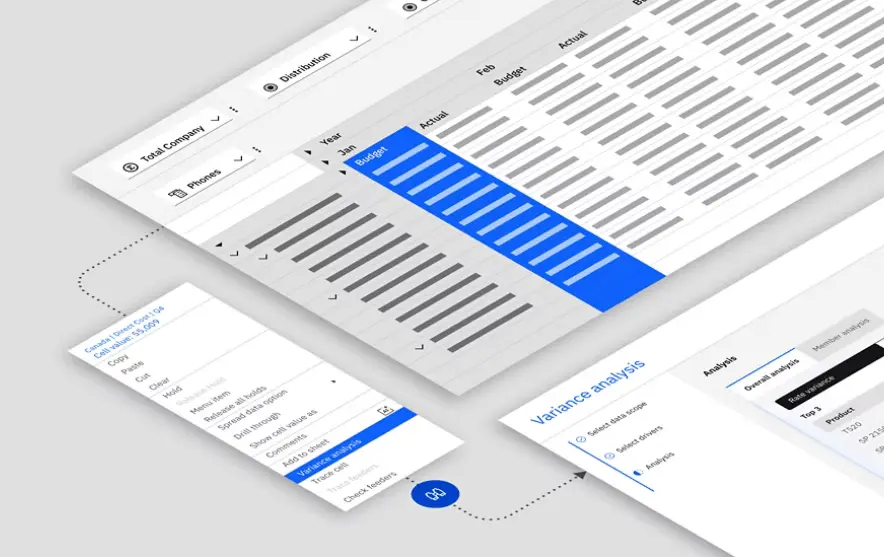
Qu'est-ce qu'IBM Planning Analytics ?
IBM Planning Analytics est une solution EPM conçue pour structurer les processus de planification, de budgétisation, de prévision et de simulation au sein des organisations. Elle repose sur le moteur multidimensionnel IBM TM1, reconnu pour ses performances de calcul et sa capacité à gérer des volumes de données complexes.
Contrairement aux approches basées sur des feuilles de calcul isolées, Planning Analytics centralise la donnée financière et opérationnelle dans un modèle unique, sécurisé et gouverné, tout en offrant plusieurs interfaces d'accès adaptées aux différents profils utilisateurs.
À qui s'adresse IBM Planning Analytics ?
IBM Planning Analytics s'adresse principalement aux directions financières, équipes FP&A, contrôleurs de gestion et responsables de la performance confrontés à des problématiques de planification complexes, multi-entités ou fortement collaboratives.
La solution devient particulièrement pertinente lorsque les processus Excel atteignent leurs limites en matière de volumétrie, de contrôle des versions, de sécurité, de traçabilité ou de simulation avancée.
Cas d'usage courants observés en entreprise
Planning Analytics est couramment utilisé pour structurer des processus de budgétisation annuelle, de Rolling Forecast, de prévisions glissantes et de simulations de scénarios économiques ou opérationnels.
La solution est également déployée pour des cas d'usage plus avancés tels que la planification des effectifs, les prévisions de trésorerie, la simulation d'investissements ou le pilotage de la performance par centre de responsabilité.
Les leviers de valeur concrets
L'un des principaux apports de Planning Analytics réside dans la réduction des cycles de planification grâce à l'automatisation des calculs, à la centralisation des données et à la suppression des retraitements manuels.
La solution améliore également la fiabilité des prévisions en garantissant une source de vérité unique, des règles de gestion cohérentes et une traçabilité complète des contributions et des hypothèses.
Collaboration, gouvernance et pilotage
Planning Analytics permet une collaboration structurée entre les équipes, avec des droits d'accès, des workflows et des validations adaptés aux responsabilités de chacun.
Les processus de planification deviennent auditables, reproductibles et alignés avec les exigences de gouvernance financière, un point clé pour les organisations soumises à des contraintes réglementaires ou de reporting accrues.
Premiers jalons d'une implémentation réussie
Une implémentation efficace de Planning Analytics commence par une clarification des objectifs métiers et des processus à structurer, avant toute considération technique.
La conception du modèle de données, l'intégration avec les systèmes sources et l'accompagnement au changement sont des facteurs déterminants pour garantir l'adoption et la création de valeur à long terme.
Tags
Last updated on May 18, 2026